
The Role of Switchboards in Commercial Solar Infrastructure: Our Partnership with McKenzie’s Electrical
Back to blogBy Russell Keys, Managing Director at McKenzie’s Electrical 2000
I’ve been in the electrical industry for over 26 years. When we bought McKenzie’s Electrical back in 2000, commercial work was our bread and butter: large fit-outs, industrial projects, anything that needed serious electrical infrastructure. Solar wasn’t even on the radar.
That changed in early 2025 when we partnered with Blackcurrent, who operate the Farmlands FLEX commercial solar programme in partnership with Farmlands. As the Lower North Island installers, covering everything from Hawke’s Bay and Manawatū through to Wairarapa, New Plymouth, and down into Wellington, we’ve moved quickly into a space that’s growing fast. And the single biggest lesson I’ve taken from that shift is one I didn’t expect going in.
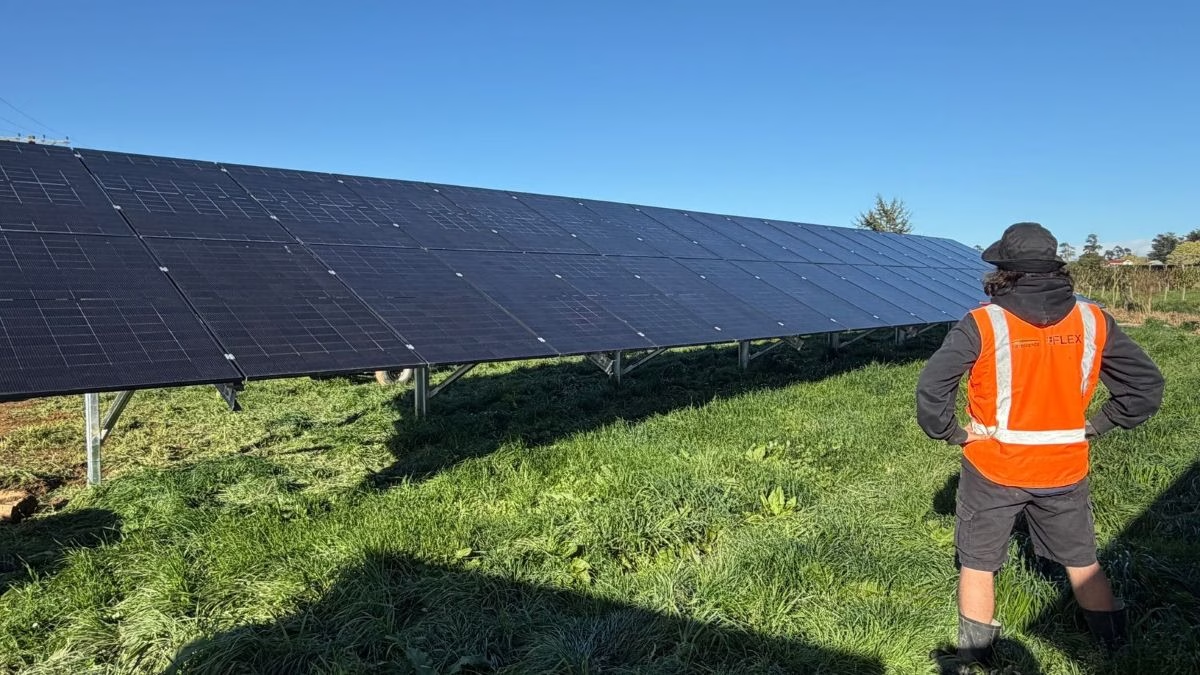
Most dairy farm switchboards simply aren’t up to the job. And without the right switchboard, the solar system can’t perform.
That’s where our long-standing relationship with Excel Switchgear has become genuinely invaluable. We’ve been working with them since 2005, when we first engaged them on a Pak’nSave build in Masterton. That relationship has carried through multiple ownership changes on both sides, and today it’s the backbone of how we deliver commercial solar projects across the lower North Island.
Why commercial solar changes everything about switchboard design
Traditional electrical loads on a dairy farm are designed around peaks. The dairy shed runs hard for a couple of hours in the morning, then again in the evening. The peaks are short, sharp, and infrequent. Switchboards are sized accordingly.
Solar doesn’t work like that.
On a good sunny day, a commercial solar system can ramp up to its maximum output and hold it there for several hours straight. That sustained full-load operation creates a completely different set of engineering demands, something I didn’t fully appreciate until we were well into our first few installs.
Cable sizing is the obvious one. What would have been adequate for a short peak load isn’t sufficient when that load runs for six or more hours. Heat builds up over time, and undersized cables become a liability. We’ve had to step up circuit breaker ratings too. A 160-amp breaker that would have been fine in a traditional application can struggle with the sustained thermal load that solar introduces.
Then there’s cabinet spacing and heat dissipation, which is one of the less obvious ones. When equipment runs at full load for extended periods, the physical layout of the switchboard and how much room there is around components matters in a way it simply didn’t before.
These aren’t theoretical concerns. They’re lessons learned directly from the field, and they’ve changed how I spec every commercial solar switchboard we now build.
Why 70% of our site visits end with a new switchboard
When Farmlands FLEX receives an enquiry from a farmer, their team does preliminary design work before anyone sets foot on the property. Once the customer is ready to consider proceeding, they bring me in for a technical site visit.
My job is to assess the full electrical infrastructure from the ground up: the transformer, the mains cable supply, and the existing switchboard. About 70% of the time, that last one is the problem. Most existing farm switchboards weren’t designed with solar in mind. They’re full, they’re old, and they simply can’t accommodate the additional load safely.
My preference in those cases is to install a new switchboard purpose-built for the solar system, then connect the existing board to it. It makes for a clean, tidy job, and the farm ends up with infrastructure that’s genuinely future-proofed rather than patched together.
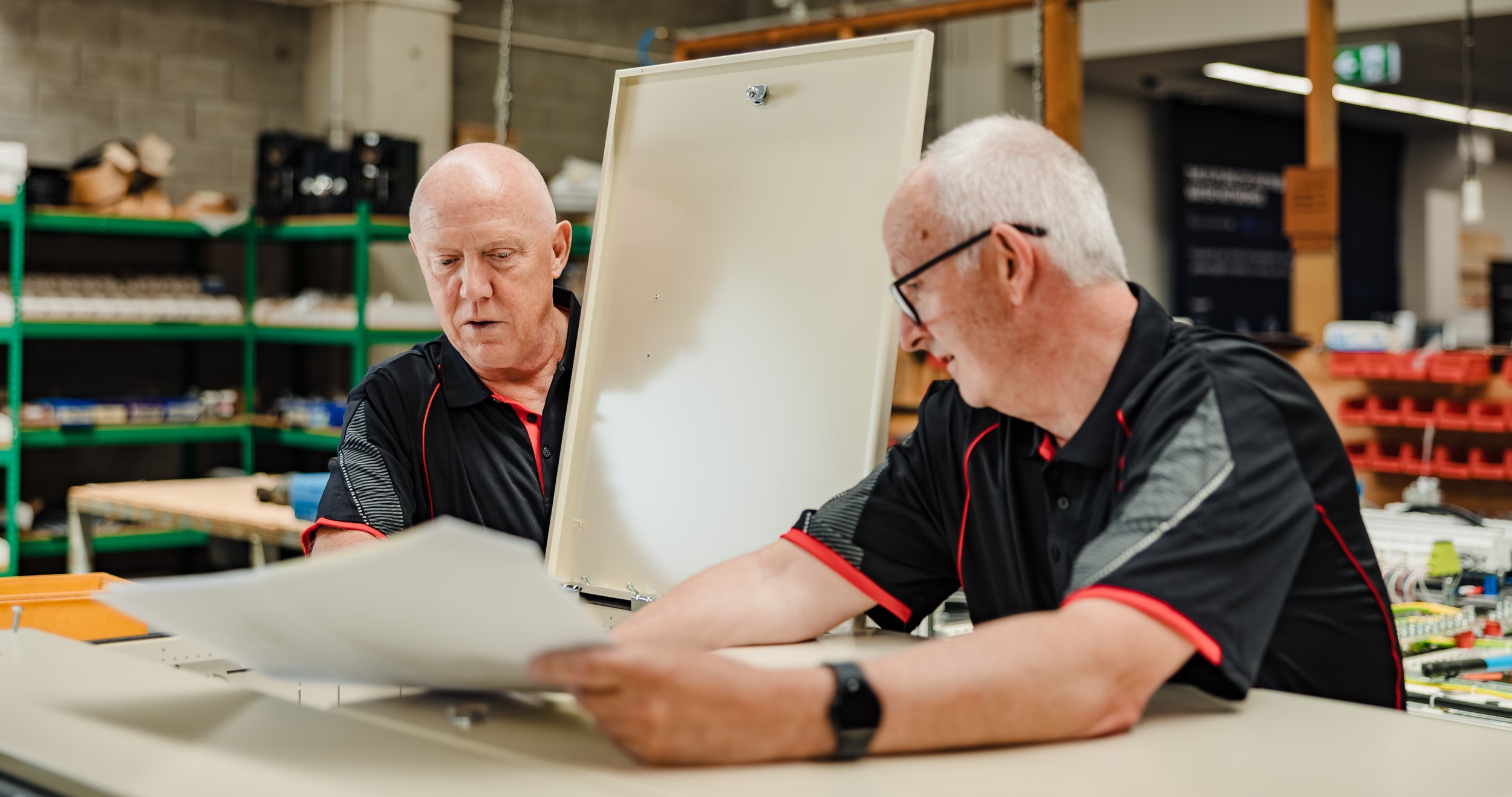
This is where Excel Switchgear comes in. For our 144-kilowatt systems on cowsheds, they’ve been manufacturing the switchboards to the specific load requirements of the solar installation. They’re also providing isolating switches and cabinets for the battery stacks, which need to meet different specs again depending on the job.
The reality of commercial solar is that no two sites are identical. I ring Antony at Excel regularly to say the solution we used last week won’t work on this one, and I need it done differently. That kind of flexibility, from a supplier who actually understands what we’re trying to achieve, is what makes the relationship work.
What I look for in a switchboard supplier
People often assume cost is the primary driver when choosing a supplier. For me, it’s not even close to the top of the list.
What matters most is this: when I ring at the last minute because something’s changed on a job, can they perform? Commercial solar projects don’t always go to plan. Specs change, site conditions throw up surprises, and sometimes I need a revised solution quickly. A supplier who can turn that around is worth far more than one who’s marginally cheaper but inflexible.
Beyond responsiveness, it comes down to consistent quality and genuine technical understanding. I need to know that every switchboard coming off the bench is going to meet the same standard. When you’re doing multiple installs across a region, repeatability matters. And I need a supplier who actually gets the specific demands of sustained full-load operation, not one who’s just filling an order.
Excel Switchgear has delivered on all three across every project we’ve worked on together. That’s why the relationship has lasted over 20 years, through multiple ownership changes on both sides, and why it’s now the foundation of our commercial solar work.
The commercial solar market right now
Domestic rooftop solar has been the headline story in New Zealand for a while, and that market will keep growing. But the commercial sector is where I’m seeing the real momentum shift.
The reason is straightforward. A business that runs eight to five has the sun working for them during most of their operating hours in summer. If they’ve got reasonable roof or ground space, solar isn’t just a sustainability play. It’s a genuine cost reduction strategy.
The sectors moving fastest are dairy farming, where energy costs are significant especially for farms with irrigation; horticulture and orchards, where cooling and refrigeration loads are high; and general commercial properties, where businesses are increasingly aware of both the current cost of electricity and the proposed increases to line charges.
The commercial market is not the same as residential, and those conversations reflect that. When I explain to a commercial client that we need to upgrade their switchboard as part of the install, they get it. Commercial operators understand infrastructure investment. They want to see the payback period, the projected savings, the return on investment. When we can show them a system that pays itself off within seven years and delivers a return north of 10 to 12%, the switchboard upgrade becomes a straightforward part of the business case.
How we work with clients
One thing I’ve learned quickly in commercial solar is that you can’t rush the process. From initial enquiry to installation, we’re typically looking at five to six months. That’s not inefficiency. It’s what responsible project delivery looks like when someone is making a significant capital investment.
The first step is always data. We ask clients for two years of power account history if we can get it, then feed that consumption data into our modelling software alongside the proposed system size. What comes out is a detailed picture of how the solar system will perform against their actual usage patterns: what it will cost, what it will save, how long the payback period is. That modelling is what drives the conversation. It takes the decision out of the abstract and puts real numbers in front of the farmer or business owner.
Once a system is installed, clients get an app that gives them visibility over performance in real time. The Farmlands FLEX software platform lets them monitor output, understand their consumption patterns, and actively manage how their battery operates. For a dairy farmer who’s never had this kind of visibility over their energy use, it’s a genuine shift.
On ongoing support, the Farmlands FLEX team monitors system performance remotely. If something looks off compared to what the system should be producing, they investigate through the software first and send us out if there’s a physical issue to resolve. In practice, the switchboard itself rarely causes problems post-installation. When issues do arise, they’re more likely to be a panel or inverter fault, which is generally straightforward to diagnose and address.
Clients often ask how long everything will last. Solar panels carry a 25-year performance guarantee, with a minimum of 80% of initial output. Ground-mounted arrays have a 25-year structural warranty. Batteries are covered for 12 years, inverters for 10. The realistic expectation is a minimum 15-year life cycle before any components need replacing, and the battery systems we use are modular. If one segment fails, you replace that segment rather than the whole unit, which significantly reduces the cost and disruption of any future maintenance.
The bigger picture
Commercial solar in New Zealand is not a passing trend. Electricity costs are rising, line charges are going up, and businesses are looking hard at their operating overheads. For farms and commercial properties with the right profile, the numbers increasingly make a clear case.
What I’ve come to appreciate over the past 18 months is that the solar system itself is only part of the story. The infrastructure underneath it, the switchboard, the cabling, the isolating equipment, has to be built to a completely different standard than what most existing commercial sites currently have. Getting that right is what determines whether the system delivers on its promise over a 25-year lifespan.
That’s why the relationship with Excel Switchgear matters as much as it does. They’re not just a supplier filling orders. They’re a partner who understands the specific demands of commercial solar, who can turn around changes quickly when the job requires it, and who has consistently delivered the quality we need to stand behind our work.
If you’re working on commercial solar projects in the lower North Island and want to talk through the switchboard requirements, I’d encourage you to get in touch with the team at Excel Switchgear. It’s a conversation worth having early, before the design is locked in.
Excel Switchgear designs and manufactures low-voltage electrical and mechanical switchboards for commercial, industrial, and infrastructure projects across New Zealand. Based in Wellington, we work with electrical contractors, consultants, and building owners to deliver compliant, reliable switchboard solutions. Contact us here.

McKenzie’s Electrical 2000 delivers complete electrical and solar solutions for commercial, rural, and residential clients across the Wairarapa. Backed by over two decades of local industry experience and a SiteWise Gold safety accreditation, our registered team provides expert advice, solar and battery design, and high-quality installations tailored to secure your energy future.
Farmlands FLEX is an intelligent energy partner for rural and commercial New Zealand. By combining solar, batteries, smart controls and expert ongoing optimisation, we help customers lower energy costs, improve energy security and get more value from their energy investments, today and into the future.
Planning a commercial solar project? Talk to the team at Excel Switchgear. We know the demands of sustained solar loads and will make sure you get a switchboard built to perform, today and well into the future.