
Why Reliability and Safety in Switchboards Are Critical for Commercial Projects
Back to blogBy Paul, Production Manager at Excel Switchgear
I’ve been building switchboards for nearly two decades. The projects vary a lot, based on whether we’re dealing with apartment buildings, food production facilities, defence infrastructure, or water treatment plants. When a switchboard fails in a commercial environment, the consequences are real. A supermarket loses refrigeration. A factory floor goes down, thousands of dollars in lost production, and potentially someone gets hurt. This is why reliability and safety aren’t something you add at the end. They’re built into every decision from the start.
What Separates a Reliable Board from One That Causes Problems
The single biggest difference, in my experience, is testing.
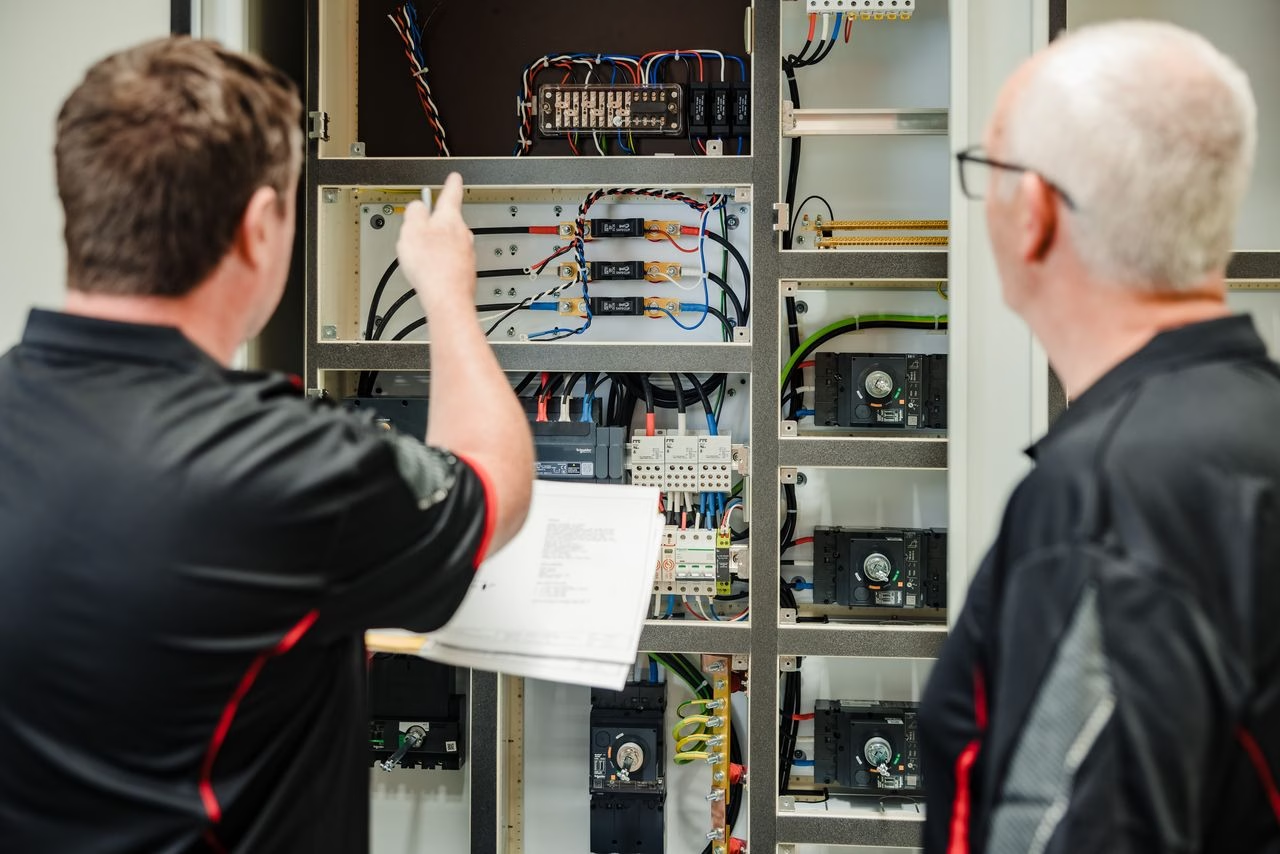
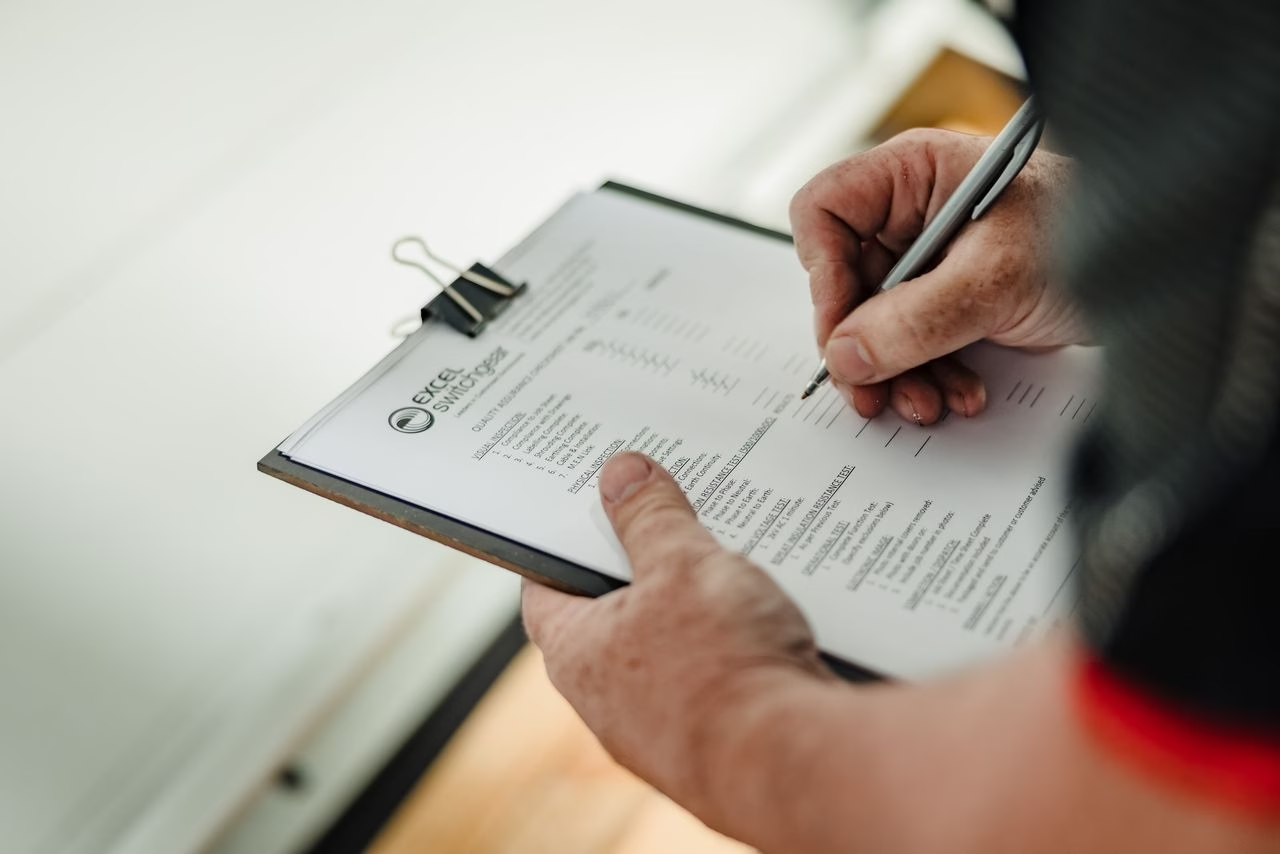
Before anything leaves our workshop, it goes through a full factory acceptance test. Every connection, every torque setting, every circuit is checked against the drawings, the specification, and our own testing procedure. The board has to leave here working properly. That’s not negotiable.
The best time to find a problem is in the factory. If something trips during testing, I want to know about it here, where we can fix it and understand why it happened. Not six weeks later, when a contractor is standing on site, wondering why the board isn’t working.
Testing also means building with the installer and service technician in mind. I’m always thinking about the electrician who’ll install it, and the person who’ll come back to service it five or ten years from now. That means components in the right places, cable runs that are neat and properly secured, doors that open cleanly. A board built for longevity is a board that’s easy to maintain, and in a commercial environment, that matters a lot.
Quality Control Is How I Work, Not a Stage in the Process
People ask me what our quality control process looks like. It’s honestly hard to put in a neat diagram, because it’s not something that happens at a specific point in the build. It runs through everything.
As I work, I’m constantly checking before I move on. Is this connection tight? Are these cables secured? Is this panel fitted correctly? I do it without thinking, because that’s just how you have to work when you’re building something people are going to depend on. If you don’t catch something early, you backtrack, and that’s when mistakes compound.
The same goes for the design stage. Before anything gets built, our design team and I go through the specification together. IP rating, installation environment, compliance requirements, all of that needs to be sorted before a single component is ordered. For most jobs, the specifications are clear and complete. For the ones with gaps, we’ll arrange a site visit, ask the right questions, and make sure we’re building the right thing for the right place.
What Old Switchboards Tell Me
When I’m called in to assess an ageing board, I can usually tell pretty quickly how it was built and whether it’s been looked after.
Rust and water damage are obvious. But the more telling signs are often subtler. Cables that weren’t properly secured have shifted over time. Components that were never quite the right fit. Switchgear that you can’t source replacement parts for anymore. A 30-year-old main switchboard might still be running, but if a critical component fails and that part’s no longer manufactured, you’ve got a serious problem.
I’ve also seen boards from other manufacturers where the workmanship just isn’t there. Cables not tied back, components in awkward positions, doors that don’t open correctly. These aren’t cosmetic issues; they’re reliability and safety issues. Unsecured cables will move. Components that are hard to access risk being overlooked or mishandled. What can look minor in the factory becomes a real risk in service.
Whenever I observe these types of issues, it feels like the board was built to a minimum acceptable standard, and the quality risk ends up being a customer problem.
Compliance Is the Floor, Not the Ceiling
New Zealand’s compliance standards for low-voltage switchboards set a minimum level of safety and performance. We always build to those standards; that’s a given. But I treat them as the baseline, not the goal.
By the time a job reaches the factory floor, the compliance questions have already been answered. Right IP rating for the environment, correct enclosure type, appropriate protection. I don’t need to second-guess those decisions because they’ve been made properly upfront.
What the standards don’t capture is the quality of execution. A board can be technically compliant and still be poorly built. The standards tell you what a board must do. They don’t tell you how well it should be made. That’s where experience makes the difference.
No Two Commercial Projects Are the Same
An apartment building needs a main switchboard at the base and metering boards on every level. A food production facility is completely different: industrial refrigeration, processing equipment, and specific environmental controls. At RNZAF Base Ohakea, we supplied over 110 boards across multiple building types, each with its own specification. At Whittaker’s Chocolate Factory, we built boards for a complex manufacturing environment with very particular requirements.
Every project is different. The principles stay the same, but the application is always unique. We’re solving a specific engineering problem for a specific environment, and building something that needs to perform reliably for decades.
What I’d Ask Before Choosing a Switchboard Supplier
If you’re evaluating switchboard suppliers, here’s where I’d focus:
Ask about their testing process. A serious manufacturer should be able to describe a clear, documented factory acceptance test. If the answer is vague, that’s a red flag.
Ask how they handle compliance. It should be sorted at the design stage, not worked out during the build. Find out how their design and production teams communicate, and how they handle incomplete specifications.
Ask to see their work. The quality of a switchboard is visible. Neat cable runs, properly secured components, clean panel work, and correctly fitted doors. Ask for photos, or better yet, visit the workshop.
Ask about experience on similar projects. A manufacturer who’s built boards for major commercial and industrial facilities understands what those environments demand. A less experienced operation simply won’t.
Ask how they handle incomplete specifications. A good manufacturer will do a site visit, ask the right questions, and advise on the right solution. A less rigorous one will build to whatever they’ve been given and leave the problems for someone else.
The Part That Doesn’t Appear in Any Standard
There’s one thing that doesn’t show up in any compliance document, but that I think is fundamental to everything else: the culture of the people doing the work.
This is precision work. It requires concentration and care, and that’s not possible when people are exhausted or rushing. I’ve seen what happens when the pressure to deliver overrides the commitment to quality. People become disengaged. In an environment where safety matters, that’s not acceptable.
Our team has been together for years. I’ve been here 19 years myself. That continuity builds trust, and trust is what makes careful teamwork possible. You see it in the small things: the way people communicate without being asked to, the way someone will stop what they’re doing to make sure a job is done safely. You can’t train someone to work like that. It comes from a culture where people look out for each other.
That’s part of what makes the boards we build reliable. It’s not just components and testing. It’s the people who show up every day and care about getting it right.
One Last Thing: We Document Everything
Before any board leaves our workshop, we photograph it. Every board goes out documented in the condition it left us: neat, compliant, and fully tested.
That’s accountability. If a board is ever damaged or modified after it leaves us, we can show exactly what it looked like when it left our premises. It protects the contractor, the client, and us.
Excel Switchgear designs and manufactures low-voltage electrical and mechanical switchboards for commercial, industrial, and infrastructure projects across New Zealand. Based in Wellington, we work with electrical contractors, consultants, and building owners to deliver compliant, reliable switchboard solutions.
Get in touch to discuss your next project.